

Japan’s interest rates hit 31-year high
 Aarthik Sanjal
234
shares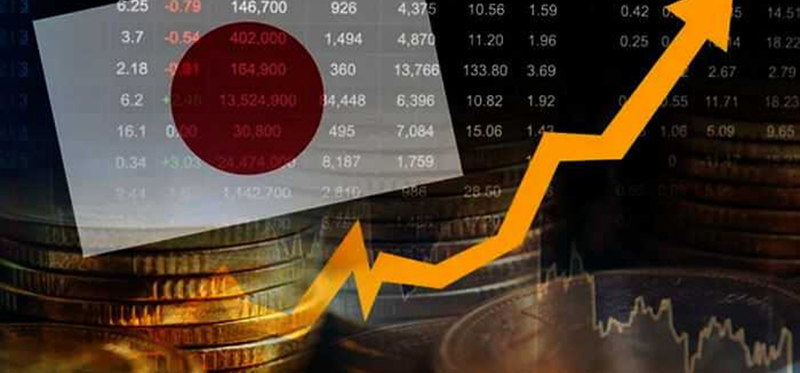



The Bank of Japan (BOJ) raised interest rates to their highest level in 31 years on Tuesday, amid rising inflation, expensive energy imports and pressure from a weak yen due to the Middle East war.
Japan has tightened monetary policy further as uncertainty remains in the global economy despite an agreement between the United States and Iran to end the war. The Bank of Japan has raised its main policy rate by 25 basis points to 1.0 percent. This is the highest level since 1995 and the first increase since December.
The move is seen as an effort by Japan, the world’s fourth-largest economy, to control inflation and stabilize its currency. The three-month conflict in the Middle East has had a major impact on global energy markets.
Rising oil prices due to the war have led to inflation in many countries. Against this backdrop, the European Central Bank and Indonesia’s central bank also raised interest rates last week.
With inflation in the US hitting a three-year high, there is growing speculation that the US Federal Reserve could raise interest rates in the coming days. However, the Fed, under new leadership, is not expected to make an immediate decision at its meeting this week.
The Reserve Bank of Australia has already raised interest rates three times this year, and the Bank of England is also expected to adopt a tighter monetary policy in the coming days.
The United States and Iran agreed over the weekend to end a three-month-long Middle East war and reopen the Strait of Hormuz. The deal is seen as crucial to the global economy, as about a fifth of the world’s oil supplies pass through the route. Although the formal signing is scheduled for Friday in Switzerland, it is expected to take time for global trade and supply chains to return to normal.
Before the war began on February 28, Japan relied on imports from the Middle East for about 90 percent of its crude oil needs. Rising oil prices and the interest rate differential between Japan and the United States have put additional pressure on the yen.
The Japanese government spent about 1.17 trillion yen, or about $72 billion, to stabilize the currency after the yen fell to 160 against the U.S. dollar last month. Although the yen strengthened slightly after Tuesday’s decision, most of its gains were short-lived.
Shigeto Nagai, chief Japan economist at Oxford Economics, said the Bank of Japan could not delay raising policy rates any further, saying a delay could upset financial markets and lead to further depreciation of the yen.
As Bank of Japan Governor Kazuo Ueda is in hospital, Deputy Governor Shinichi Uchida was scheduled to address the media after the decision.
According to Ryutaro Kono, chief economist at BNP Paribas, Japan’s economic risks have eased somewhat and there are signs that underlying inflation could rise further.
He said domestic demand is also relatively strong due to government subsidies for petroleum and energy. However, there has been analysis that raising interest rates too aggressively could lead to disagreements with the government led by Prime Minister Sane Takaichi.
Meanwhile, disagreements have also been seen within the BOJ. At the previous meeting, three members of the nine-member board voted against the decision to keep interest rates unchanged.
Investors and markets are now focused on whether the Bank of Japan will signal another interest rate hike in the coming months, as well as the bank’s future strategy regarding its massive bond-buying program to keep borrowing costs low.